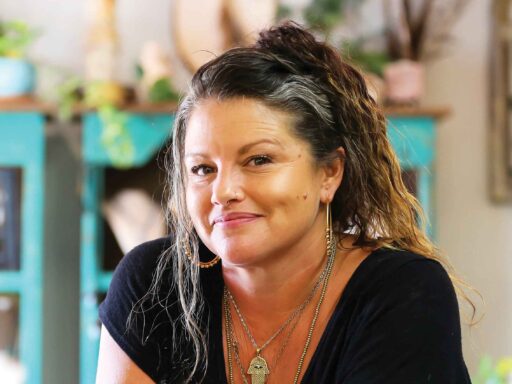



Sara Stuart
Sara Stuart pioneered an insurance-free medical practice in Boerne

Dr. Sara Stuart enters the interview with an apology. She’s quite emotional at the moment. Her office just received word that one of her most beloved patients has passed away. “Everyone is in tears right now,” she said. She shrugs off an offer to postpone and instead proceeds to spend several minutes painting the picture of a cherished older woman who, only days before, had spoken kind words to her.
Another picture begins to emerge, not of the patient, but of the doctor. It’s a snapshot of decades ago, back in what sentimentalists call “the good old days,” when every town had a doctor like Sara. In fact, you probably know the all-American cliches by heart: a family doctor with an office right on Main Street, across from the town park and a favorite dining spot. Someone who led from the heart, attended patients’ funerals and the recitals of their children and grandchildren. Who’d spent the time to learn the root causes of what ailed you before dispensing solutions. Who’d give you an hour of her attention without a second thought, and whose personal phone number was a matter of public knowledge.
If you think such descriptions are just an idealized collection of outdated stereotypes, or simply fear that such doctors no longer exist, you’ll be pleased to make Sara’s acquaintance. While she’s no stereotype or cliche, she and her colleagues at Cibolo Family Medicine live and practice literally on Boerne’s Main Street, straight across from Main Plaza and diagonally across from the Dienger. And like the best doctors among us, she feels like part of the city’s beating heart.
You see, Dr. Stuart, her husband, Colin, and their four children aren’t in Boerne because a spreadsheet or an algorithm chose it for them. As you’ll soon learn, she’s had a lifelong love affair with Boerne and the Hill Country and chose this as the home for her medical practice, her family and her life for the same reasons most Boerneans do. “Because we love the place and have fallen in love with its people,” Stuart said.
Boernean: You grew to love the Hill Country during your youth, and so I’d love to know about your life and how it led you to Boerne, along with what you love most about the area?
Stuart: My Oma and Opa were from Fredericksburg, and so growing up, we had family here and would visit a lot with my father. Then, when I met my husband, Colin, 15, 16 years ago, his family had moved to Boerne, and his parents had been here for eight years at that time. So we would visit off and on, and I grew to know even more about the Hill Country that I didn’t before: not just going to Oma and Opa’s and all the beautiful things that Fredericksburg has to offer, but about the people and the culture and the community. We would visit Canyon Lake, we would drive from Houston every weekend in the summer — we wouldn’t even be present in Houston in the summer, even though it’s where we lived. We would be here.
Then I was sitting with his parents one day, enjoying some time at a historical site, having some food and I just felt so happy and at peace that I looked at Colin and said, ‘We should move here someday.’
I’m from a small town — Alice, Texas — where you run into people at the store and know everyone, so I just like the small-town feel. We knew that raising a family would be much easier, offer more opportunities and be a happier place to raise children than in the big city of Houston. We just knew we wanted to come here. I fell in love with the place. And when we arrived, we were so embraced and loved by the community! I feel like now — I run into people at the store, or I walk across the street from my clinic to the diner and one of my patients honks at me from their car to be funny, and I play being scared by hopping off into the street like a scared cat. I love the community here.
Boernean: How long have you lived in Boerne?
Stuart: We’re going to celebrate our 10-year anniversary of the clinic in April 2026, so we’ve been here nine and a half years.
Boernean: Did you have your own clinic before moving here, or did you take the opportunity to open one when you arrived?
Stuart: I always knew I wanted to go into healthcare. I came from a large family with like 15, 16 aunts and uncles total. Only one had really gone to college and become what you might call successful, able to raise and support a family and enjoy the fruits of life because of education. She was a physical therapist and was my idol, which encouraged me to go into physical therapy. But when I was a sophomore in college and had to do physical therapy hours, I went up to Dallas at UT Southwestern, where she worked, intending to get my hours for PT school, and quickly found that PT wasn’t for me. It wasn’t comprehensive enough. Maybe I didn’t feel like the boss enough. I wanted to know what was going on. I was like: what’s going on with this patient? Why are we doing this? Like, what’s the backstory? I need more information.
I thought my whole world had fallen apart. I remember crying on the steps of the UT Southwestern campus and just asking: ‘What am I gonna do with my life?’ So I started shadowing other people in that hospital: dietitians, P.A.s, physicians, speech therapists. It hit me that whenever I was watching a physician looking at an X-ray, reading it, teaching students and telling the plan of how we’re going to treat, and everybody was like, ‘Yes, sir,’ I just knew: that’s what I wanted. I like knowing a patient’s backstory, making a plan, identifying whatever we can do to treat — it’s just so comprehensive. I knew I wanted to go into medicine.
I applied for medical schools and realized applications were due in a year, and I hadn’t taken the MCAT. So, I studied really hard, completed med school and then started residency in family medicine. I just love treating the whole person. I love treating all ages. I love learning about everything, and I enjoy getting to know people.
But I quickly found out, somewhere in my first year of residency, that something was broken in the system. There would be a lot of patients on my schedule — more than what was appropriate. It became hard for me to spend time with each patient. I couldn’t connect with them very well. I didn’t have time to call them back about this and that. And if they wanted to come in and see me — well, my schedule was full. I just felt a lack of connection with patients, seeing 20 to 30 a day. Sure, some came in with coughing or colds, but then sometimes there was more to it. You realize, maybe it’s not just a cough and cold. Maybe you recognize a child who’s going through depression, and it takes longer. I want to have time to do that.
I came home with my husband after my first year of residency and said, ‘I don’t know if I can do this long term. I think I’m gonna get burned out. Like, I feel like I can’t do the patient care that I want to do.’ He said, ‘Well, why don’t you just look at cash pay practices?’ I barely knew what he was talking about. I started Googling cash pay practices and then found membership-based practices. This is something my residency program didn’t teach about at all, because they were teaching doctors how to use the insurance system only. I reached out to doctors all across Texas, and basically shadowed some of them. I noticed that limiting the number of patients you saw made a lot of sense. If you didn’t see a million patients a day, you could actually have more time and build more relationships. You can do more preventive health.
You can be a part of their lives, part of their family and advocate for them with specialists. You can treat more in your clinic and not have to refer them out to every specialist or even urgent care.
So that’s when I learned that I wanted to do a membership-based practice outside of the insurance system, outside of the red tape and practice medicine the way that I believe it should be practiced. Because insurance, unfortunately, dictates a doctor’s number of patients, their fees, and if a physician needs to see 40 patients a day to keep the lights on. And those patients get to speak only a couple of sentences. Well, that’s just not how I believe healthcare should be. I knew this was the sort of practice I dreamed of having one day: a model specifically called direct primary care. A form of concierge membership-based practice that’s more affordable and brings more value to the patient.
I shadowed some doctors in Kansas who were the leaders in direct primary care. I did this in my third year of residency and developed a plan for how I would eventually establish a membership-based practice. My dream practice. I graduated from residency and didn’t want to sign into a five-year contract for insurance-based medicine and be unhappy, so I worked in urgent care for six months in Houston. And during that time, Colin and I decided to move to Boerne. There are many great doctors and practices here, and opportunities for me to join some of them. But I thought, ‘Well, we don’t have any kids, so why don’t we just start my practice?’ And if it works out, that’s great; if it doesn’t, I can find work.
So that’s what we did. We moved here, got a place on Main Street, Colin built the website, his mom helped answer the phone sometimes, Colin answered the phone other times (and wasn’t that good at it — an engineer/receptionist. I was thankful when we finally hired somebody.) We were one of the first direct primary care practices in this area. There were a few membership-based practices in San Antonio, but the concept was foreign here at the time. As I tell patients: you get same-day appointments, you don’t have to wait, you get my cell phone, free-included labs and imaging far cheaper than your insurance, and you don’t have to go to the urgent care. You can come here, and people were like — ‘What is this?’
So we hit the ground running and joined the chamber, became active in the community, which we love to do anyway and here we are now. We have two clinics: one in Boerne and one at Crown Ridge and I-10, just north of Oak Hills Church. We’ve got two doctors at Crown Ridge, three here in Boerne and we’re still getting new patients.
I try to stay faithful to our mission, which is: we’re here for our patients, not only to connect with them but to be an advocate and have time for them, be available for them, make it truly a family medicine practice. So after being in urgent care, I came here. Most docs get out of residency and open their practice at the same time and get a lot of patients funneled to them. Here, it was like a new place, new people and a new concept. I worked hard to connect with a lot of people, and now direct primary care has grown exponentially. Currently, there are 15 in the greater San Antonio area, scattered throughout the city. Not only are physicians and patients seeing the benefits it brings to patient care, but also physician organizations, such as the American Academy of Family Medicine and other academies, are endorsing direct primary care because they’re seeing the impact it has on patients.
Boernean: How would you say that some of these benefits you’re talking about feed into you being able to be a deeper, more meaningful part of the community?
Stuart: So, whether or not you have insurance, this practice is beneficial because many patients, even those who have insurance, often have a $10,000 deductible. With our practice, in a year’s time, you pay for the membership itself with all the savings you get in the clinic. Because we have so much time for patients, when they come in with a laceration, we can fit them in the same day. When somebody needs a specialist or something’s going on, I have time to call the specialist and get them in sooner. I can expedite patient care in the community because I have the time to advocate for them.
I remember when I first started the practice, I had an hour with them to hear their story, their struggles and understand them: not only their medical issues, but emotionally, physically and spiritually. I had several patients just cry. It moved me when they shared that they had never felt listened to before in the medical community. They didn’t feel listened to, things were unfortunately missed, their health was ignored and they often felt belittled.
This type of practice completely reverses that. We embrace our patients with open arms, and we’re here for them. I feel like it creates a community within the clinic and even outside the clinic because my patients see that I care for them. When they pass away, I attend their services. I go to their Celebrations of Life. The other day, I went to the thesis presentation of a patient’s child. This kind of practice allows that.
Boernean: It sounds like you also integrate an element of faith in your practice, and I’m curious, is that the case, and if so, how would you care to describe that?
Stuart: Coming to the Hill Country, we connected with Currey Creek Church and became a part of a small group years ago. For the first year, we were like, ‘We don’t have any friends here, we’re working so much on this clinic, we need to have friends.’ So, we decided it was time, and that small group of people at Currey Creek has become lifelong friends.
My strength and faith have grown since moving to Boerne. I’m ready to share that with patients if they’re open to it or need it. Healthcare, as we know, isn’t always just a cough and cold. There are patients with trauma or just challenging circumstances. There have been times when I’ve led by what’s in my heart, guided by God to do what’s best for the patient in that moment. If I feel it’s an appropriate time and place and the patient is open to it, then I share the word of God and what it encourages us to do, how he leads us, and how he can ultimately protect us.
Boernean: You sound like a very relational physician. How do differences between osteopathic and mainstream medicine feed into these distinctions of your practice?
Stuart: Of course, we get the same training and the same board certification. The key differences between DO and MD are that the core value of DO’s training treats patients holistically, not only physically, but mentally and spiritually. They really instill the importance of that in medical care. We’re also trained in medical school on manipulation, a more in-depth mastery of the musculoskeletal system and how manipulation techniques can help heal the body. I was told on my first day about the importance of the physical, mental and spiritual components of patient health. That shone through the medical training and has carried over into my practice here.
Boernean: Let’s segue just a little bit to slightly more personal things. How do you balance this incredible practice and your home life?
Stuart: I think God creates a lot of balance. There are times when I just have to remember that he’s in control, he leads us and shines a light in the dark. There’s my small group community, and that network of support. I have family here, and Colin’s parents help. I work on creating self-boundaries surrounding when to turn off work with my family. I have four children, ages two and a half, four, five and a half and eight, so it’s important for me to be present at home in the morning with them and in the evening. It took a lot to be able to turn that switch off over time, but the beauty of this practice is that it allows for a family life balance as well.
My heart goes out to all the family medicine physicians who practice in traditional settings, as insurance companies often require them to see 25 to 30 patients a day. There’s no time to get paperwork done during that time, so the doctor will go home and when their kids go to bed, they’ll stay up from 9:30 to 12:30 a.m. doing documentation every night and even on the weekends. I’ve heard in physician groups about the struggle with that; about how much time and how much of their children’s lives they’re missing because they must do all this computer work. But in my practice, because we limit the number of patients we see, not only am I able to give them my time during the day, be present for my family after work and for my patients if they need me, but also be more present in the community too.
Boernean: What do you typically do to unwind, really let your hair down and have fun?
Stuart: Besides changing diapers, you mean? I love to be outdoors. We were fortunate to have 25 acres of property, so we play outdoors with the kids and have a trail on our property. We like to run, bike, exercise and we like to swim, so we’re very much outdoors and physically active. My husband and I love to do that. Our kids see that too, and I really see how, when parents are active, it instills those habits in the kids. My daughter was proud that she did 20 sit-ups the other day, and she’s eight. I didn’t tell her to do that!
Boernean: Do you have a favorite spot in Boerne or a hangout?
Stuart: We like taking the kids on walks next to Kinderpark. I love getting out and going across the street to the Dienger and getting coffee.
Boernean: What’s the typical Friday night?
Stuart: So, the kids always call it a ‘movie night,’ and so we call it that. My husband, an engineer and total computer nerd, has installed a screen that comes down and a projector to watch the movie. My son makes the popcorn. We heat the butter and have movie night on the couch together. Just cuddle up and eat loads of popcorn. That’s what we do: it may not be that exciting, but the kids get really excited about it, so that’s great.