



Like a Lighthouse
Inspiring styles and inspiring souls

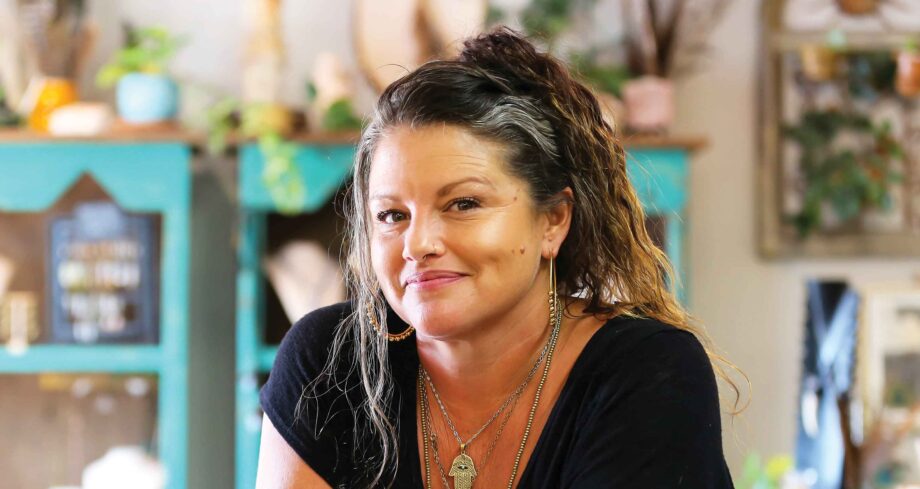
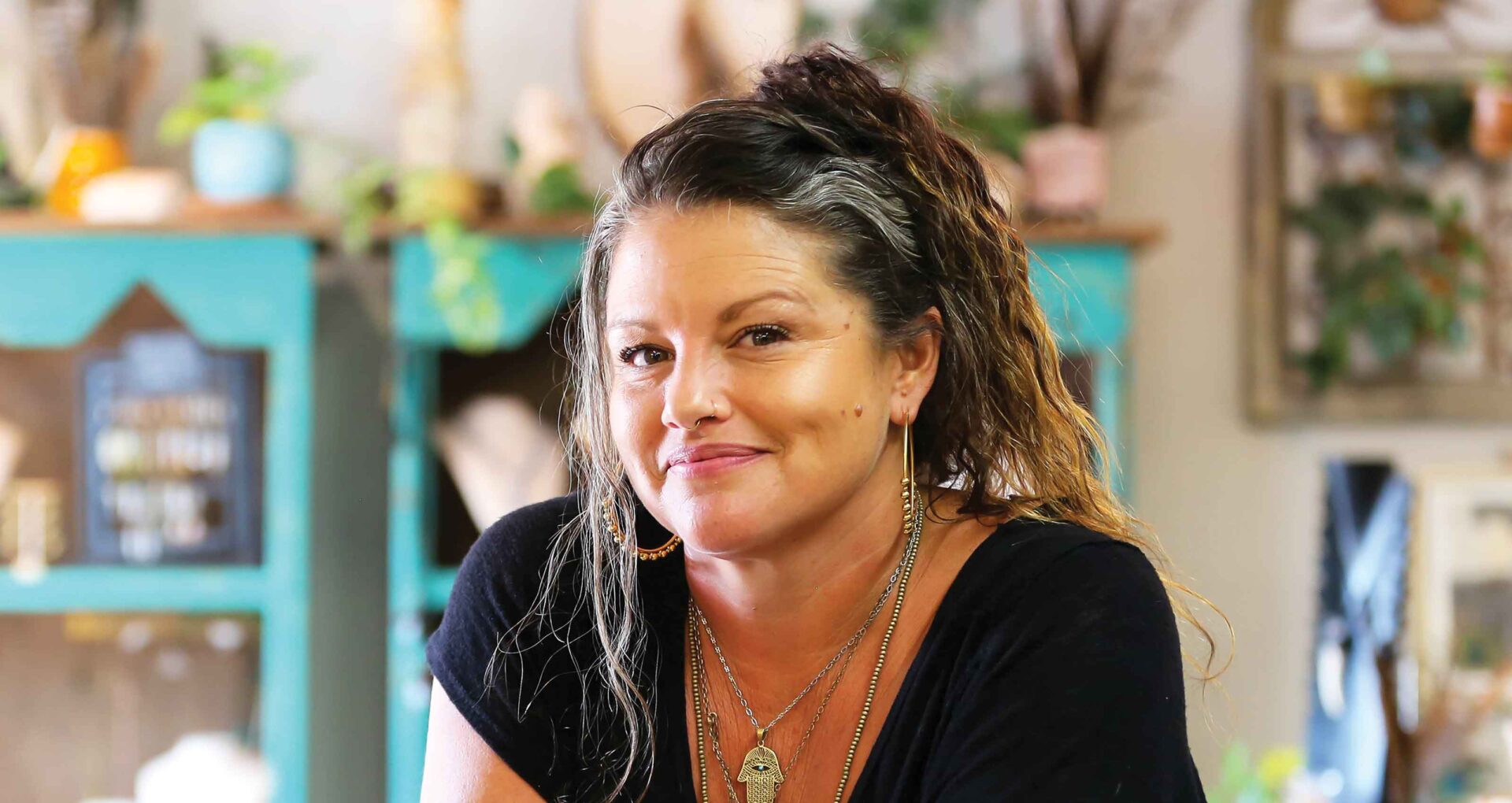
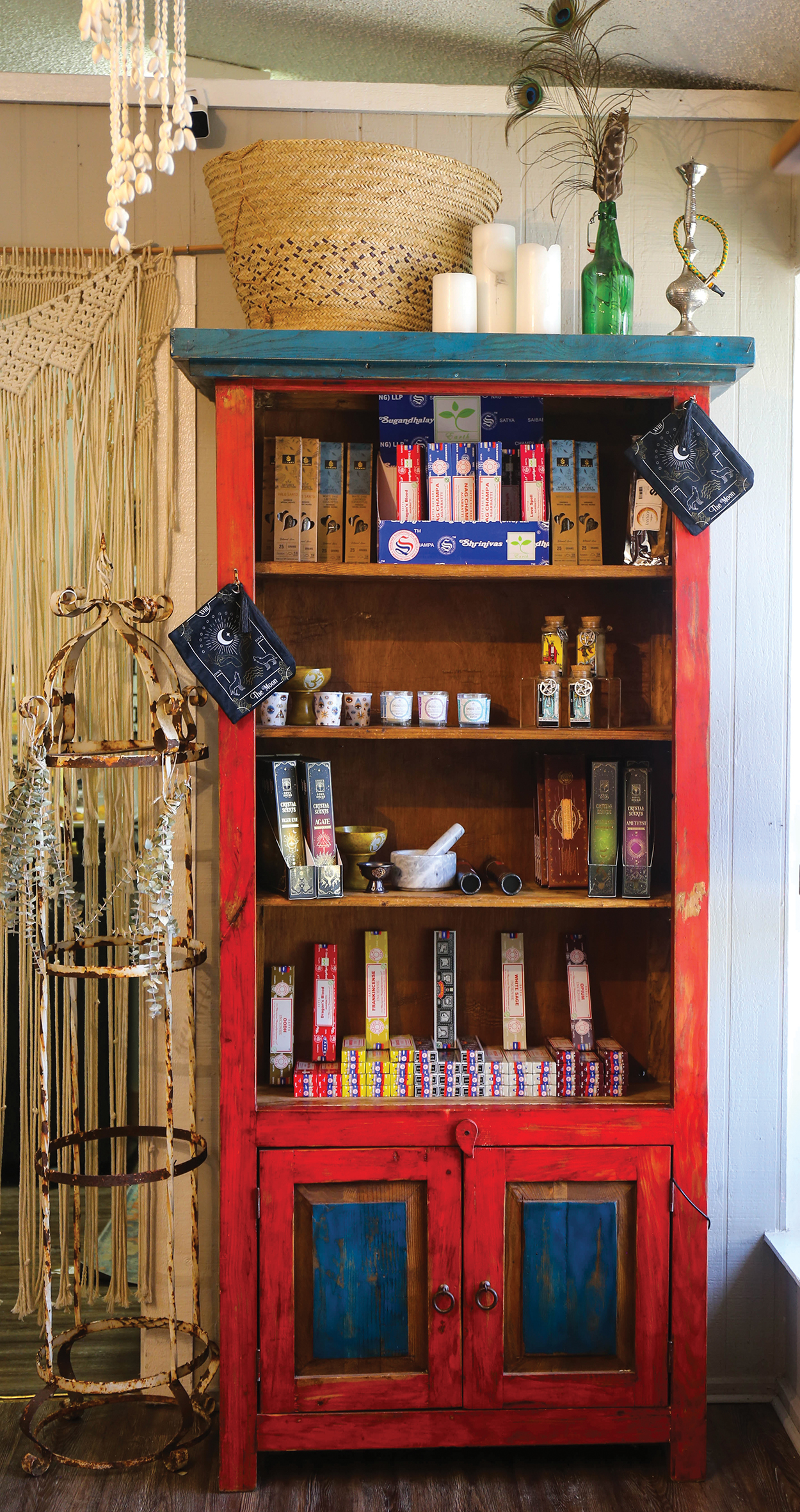
As she welcomed us into her shop, Juliana Muse seemed to float on a cloud of quiet confidence. The kind of person who is so authentically themselves, you can’t help but be intrigued. She lives her life with a joy she has earned, and it radiated like the sunlight streaming through the ceiling height windows, pouring across vintage chairs too comfortable (and cool) to sell. It danced over colorful, polished stones and crystals. It caught the iridescent green eyes floating in the center of the multitude of feathers, gently swaying in vases and on shelves dotted all around the store.
I asked Juliana about them, casually toward the end of the interview, not expecting much. In her world, though, small questions often unlock big stories. The feathers, it turns out, weren’t just for decoration — they carried their own story, one she told with that wide-open sincerity she brings to everything she does.
“So, every peacock feather you see around here has been brought to us,” Muse told me, explaining how regulars drop off plumes from birds in their own yards. When she started her business, she tied a feather to every lovingly gift-wrapped purchase. Now customers return the favor, and the gesture says as much about her place as the merchandise on the racks.
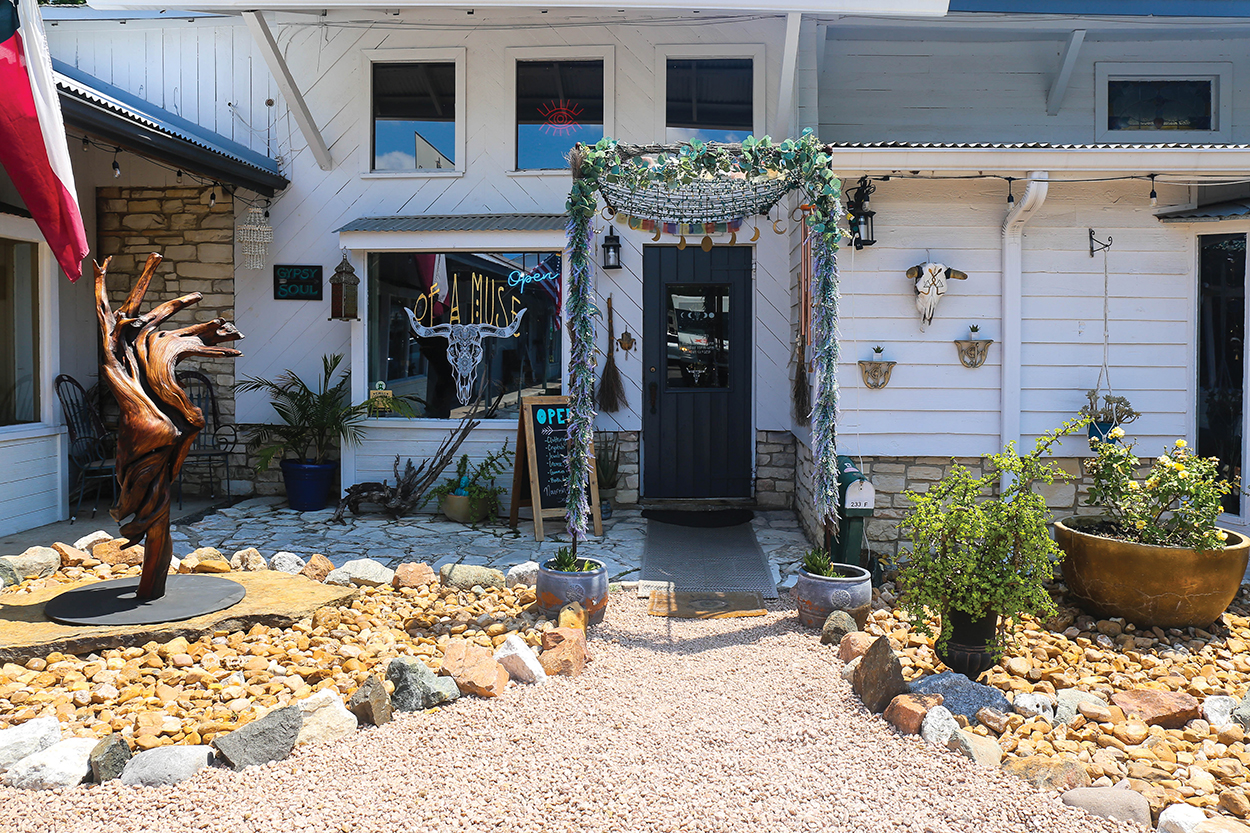
Her boutique is like that. It’s not just stuff on shelves. It’s atmosphere. It’s a community. It’s a little pocket of magic in Boerne’s Old Town, where you might run into one of her first customers ever, learn something new from her longtime store manager or find a friend who stopped by to check it out and left with a crystal and a new perspective.
On the day I visited, all of those things happened — and more. I ended up talking to Cheryl, one of her earliest supporters, and to Alyson Shields, who is more like a sister than store manager.
“I love making people happy,” Muse said. “That’s the reason I do this. The store is how I get to make a difference in someone’s day.”
If you walk into Of A Muse, don’t be surprised if you stay longer than you meant to. And don’t be surprised if you leave with something you didn’t plan to buy — or something Juliana picked for you herself. That’s how she works. That’s how the magic works.
Boernean: So tell me how this all began.
Muse: Well, it really started at our house. Back in the day, when Random first opened out by Boerne Lake, we used to go out there just to meet people, because we didn’t know anyone here.
I was already posting on Instagram, and women would see my stuff and ask me to bring clothes out there. They would try them on, right there at Random. That’s kind of how it all began.
Then I set up my first pop-up in their little house on the property. From there, we ended up talking to Paul, the landlord, years ago. I think it was 2014, and he told us there was a space open. I thought, “Okay, I’ve got a bedroom full of stuff, but I don’t know if I have enough to fill a store.”
And literally, we opened on the day of Dickens on Main.
Boernean: Oh, wow. That’s insane.
Muse: It was so insane. Just jumping right in, sink or swim. And we’ve been here ever since.
That’s the thing — a lot of businesses don’t make it even this long. I feel lucky.
Boernean: It’s very cool that you started online on Instagram and then moved to brick and mortar. Back then, online was really good. These days it’s harder. Especially with shipping.
Muse: Oh yeah, shipping is crazy now. After COVID, with lost packages, delays, and everything costing more, it just got harder.
Boernean: I had started my little resale business right before COVID. Then everything shut down. I couldn’t source in stores, so I ended up buying from online estate sales and auctions.
Muse: Oh yeah, I remember those.
Boernean: I’d get random boxes shipped from all over the country. At first shipping wasn’t bad, but then it crept up. More people started reselling, and suddenly it felt like everyone was at the thrift stores, scanning things with Google Lens.
Muse: Yes! I see that too. We used to sell vintage, too. We’d go to LA, to these big flea markets, get vintage stuff, and bring it back to sell here. But it got blown out — Houston and Austin were full of people doing the same thing. And honestly, Boerne buyers didn’t always understand the value.
Online buyers got it. They understood why something from 1950 costs what it does. But here, people would ask, “Why is this $100?” That made it hard.
Boernean: Yeah. For me, it’s the old stuff. It’s history. You hold something and realize it was around in 1920, maybe 1890, and somebody actually used it. And they don’t make things like that anymore.
Muse: Nothing’s quality anymore. That’s our joke — ‘Oh, it’s new? Then it’s crap.’ It’s just going to fall apart so you have to buy another one. That’s how they make their money.
Boernean: Right. I know that feeling.
Muse: That was my obsession too. We went to Round Top before we ever opened, and we just lost our minds. I was like, ‘I need so much money right now. How much can we carry? How many old doors do I really need?’
Boernean: You can never have too many old doors.
Muse: Exactly. They’re so versatile.
Boernean: So tell me more about what brought you to Boerne.
Muse: We were from a really small town outside of Paso Robles, California. When we looked at Google Earth, we saw Boerne. All the trees, the hills. It literally looked like home. Where we were from was also called the Hill Country. I didn’t even know Texas had a Hill Country until then.
My brother was already in San Antonio. And my dad — before he passed — had once told me he really liked it here. He had ridden his motorcycle from California to visit my brother and mentioned it.
I lost my mom in 2007, and then my dad in 2013. After that, my husband and I were like, ‘We need a change.’ We sold our house, packed up our cars, loaded a U-Haul with our dogs, and just came here. Never been here before.
We found a house, bought it and we’ve been here ever since. We had no idea what we were doing. My husband worked for the state, in a prison as a psychiatric tech. I cleaned houses and did mortgages. We’ve always hustled.
While we were redoing our house, we lived for two weeks in that little hotel above Jac’s on Main Street. I remember telling Josh, ‘Maybe I could just be the maid here. She gets to clean the rooms, take care of the plants.’ He said, ‘No, babe, there’s something else out there for you.’
I’ve always been that way. I have to be doing something.
Boernean: And you turned that energy toward fashion and fabrics?
Muse: Yes. I’ve never been a name-brand person. I’m all about how things look and feel. I’m obsessed with fabrics. I love styling people. That’s always been my thing.
I started ordering from companies online, but the first few were horrible. I literally donated the clothes to Goodwill. I thought, ‘I’m not putting my name on this.’
So it was trial and error. I kept at it until I filled up a room with pieces I loved, from companies I trusted. I never went to markets at first — just slowly built it, little by little.
Boernean: That’s amazing. What inspires you now?
Muse: People. I love making people happy. That’s my absolute reason. That’s why I do this. To make a change in someone’s day.
I have women come in all the time and say, ‘I could never wear this.’ And I love showing them they can. I’ve dressed people from 12 to 85. Not everyone’s the same size, so I carry all kinds of fits. I’ve never been small myself, so I want bigger-bodied women to feel beautiful too.
A lot of moms come in and say, ‘I’m old now, I have to cut my hair short and dress frumpy.’ And I’m like, no. You don’t. I want to be dressing like this until I’m 80.
That’s my favorite part.
And then there are the stones, the books, the crystals. So many different walks of life come through here. So many religions. Some think we’re a weird voodoo shop. We’re not. I don’t sell Ouija boards. I don’t do black magic.
It’s just about opening people’s eyes. Helping them feel good when they’re here. That’s what I love.
Shields: And people come in weekly. That’s really the reason we’re still open.
Muse: Exactly. It’s the locals. Tourists are great, but it’s the local people who keep us alive.
Boernean: You also host events here — tell me about those.
Muse: We’ve been doing moon circles for years. Michelle, who’s incredible, leads them. They’re hard to explain because every one of them is different, but they always connect people to the energy of the month.
She sets up these gorgeous spreads of flowers, candles, herbs — it’s just beautiful. It’s not something random she learned in a class online; it’s been passed down to her through her family. When you meet her and see the people who gather, you realize it’s something you just have to experience.
We also do sound healing with Tara, who teaches at the Cibolo Nature Center. She’s been doing it forever. When she finally agreed to host one here, her first session was so packed. She’s gifted. Again, it’s not like she just read about it and decided to try — it’s who she is.
And then we started First Fridays. That was Alyson’s idea.
Shields: Yeah, I thought we needed something that would get people excited and out of the house.
Muse: Exactly. Old Town can feel like crickets sometimes, you know? So we decided, okay, let’s do First Friday. We planned it in five days. We were steaming clothes right up until the party started. We made cocktails, set out food, stayed open until nine. It was amazing.
Shields: It’s not just shopping. It’s hanging out. People want something besides restaurants or breweries.
Muse: Yes. I told my husband, we have to make sure there are options for everyone. Not everybody drinks. So we offer THC drinks, sparkling water — just something to sip while they chill with like-minded people.
It’s about giving people somewhere to go.
Boernean: And that changes the whole atmosphere of the store.
Muse: That’s always been our goal. It’s not just a store. It’s an atmosphere, a safe space. People come here to shop, but they also come just to talk, to feel seen.
A lot of shops can feel intimidating. Some people even say they’ve been treated rudely in other places. We want the exact opposite. We want you to feel welcome the second you walk in.
Shields: It’s like a community space as much as a boutique.
Boernean: That’s rare. That’s hard to achieve.
Muse: Yes. And that’s what we’re big on. We want people to thrive together. If I know someone else in town sells something, I’ll send people to them. If another shop already specializes in something, I stop carrying it.
Because it’s better for everyone to succeed than for someone to shut down.
Boernean: That’s a good philosophy.
Muse: Like, we used to sell essential oil diffusers. Then I heard another store in town was carrying them, so I just started sending customers there. Same with wind chimes — we used to sell them, but A Little Nature Store does, so I send people there.
That’s what keeps our community strong.
Boernean: What does Boerne mean to you, as both a creative and a business owner?
Muse: It’s home now. I love the mix of old and new — ‘old Boerne’ and ‘new Boerne.’ When we first got here, everyone asked me what church I went to. That’s the number one question. I’d say, ‘I’m spiritual. I love it all.’ And people didn’t always know what to do with that.
But that’s who I am. I find goodness in every tradition.
Running a business here, for me, is about connection. We support each other. If another shop has something, I don’t need to compete. I want to see them succeed.
Because if they succeed, the whole community does.
Boernean: That’s refreshing.
Muse: And that’s what keeps us different. People come in here and say, ‘You feel like a lighthouse.’ That stuck with me. Because we’re not just selling clothes and crystals.
We’re making people feel good about themselves.
Shields: And that’s why people keep coming back.
Muse: Exactly. We’ve had people come in during the darkest parts of their lives. And somehow, whether it’s through clothes, stones or just a conversation, they leave lighter. That’s the best part of what we do.
Boernean: How do you balance creativity with running the business side of things?
Muse: Honestly, this is the first time in my life I’ve been able to be completely myself. In every other job, I had to play a role just to make money. Here, I get to wear what I want, be who I am and pour myself into it.
My husband is the brains of the operation — he handles the back end, while I’m the face out front. I’m so thankful he believed in me and let me chase this.
It’s not easy. The financial side is tough. People think if you own a business you must be rich, but that’s not true. You make money and it goes right back out. But I wouldn’t trade it. You’d have to drag me out of here to make me stop.
Boernean: That’s the creative-entrepreneur balance right there.
Muse: Exactly. And you realize, not everyone gets that. A lot of shops on Main Street are hobbies for their owners. For us, this is our livelihood. This is how we support our family.
That’s why we stay open late if people are here. Why would I turn customers away?
This isn’t just a side project — it’s everything.
Shields: And that’s what makes it different.
Boernean: Looking ahead, where do you see the future of Of A Muse?
Muse: More events, for sure. That’s the direction I want to grow. Classes with crystals, smudge jars, little workshops — all of that.
I’ll admit, I’ve always been nervous no one would show up. I’m the kind of person who never had birthday parties because I was afraid nobody would come. But doing First Fridays gave me confidence. People crave this kind of community.
So that’s my goal — more events, more connection, more opportunities for people to come together in a space that feels welcoming.
Shields: We’d honestly do it for free if we could. That’s how much we love loving on people.
Muse: She’s right. That’s why she’s my partner in this.
Boernean: You named your shop Of A Muse. Do you see yourself as a muse?
Muse: Yes. A muse is someone who inspires others, and that’s why I opened this shop.
To inspire your style, inspire your soul.
When people walk out of here, I want them to feel like they can be who they want to be — confident, comfortable in their own skin. That’s what it means to be a muse to me.
Boernean: That’s beautiful.
Muse: Thank you.